
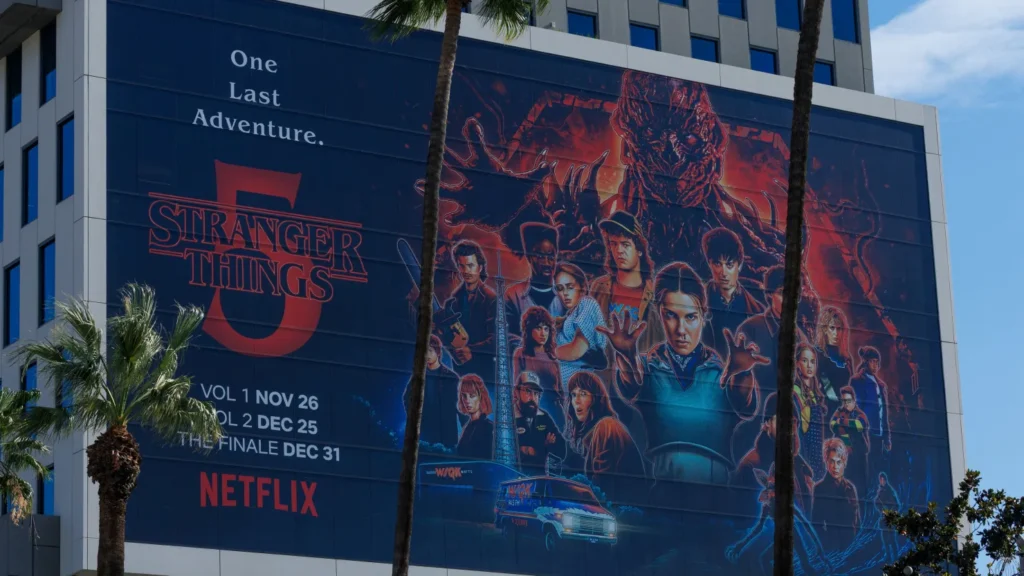
Before finding a place on Netflix’s current lineup of original content, the original idea for what would eventually become “Stranger Things” was turned down by over fifteen studios.
Ten years later, the series that Matt and Ross Duffer developed, wrote, and directed has grown to become one of the most significant cultural icons of the streaming era and has established Netflix as a leader in the industry rather than just a rival.
“People frequently discuss Netflix and claim that the release of ‘House of Cards,’ which was a huge hit, was our big moment. At the “Stranger Things” Season 5 premiere in Los Angeles last month, co-CEO Ted Sarandos remarked, “But our real moment was when we put on ‘Stranger Things.”
“House of Cards” was excellent. He went on, “It kind of told the world that we’re going to make some really good TV shows.” However, this was far more akin to a “Star Wars” scene with “Stranger Things.” Characters from this show have influenced culture and given rise to live events, consumer goods, spinoffs, and sequels.
The Final Bow
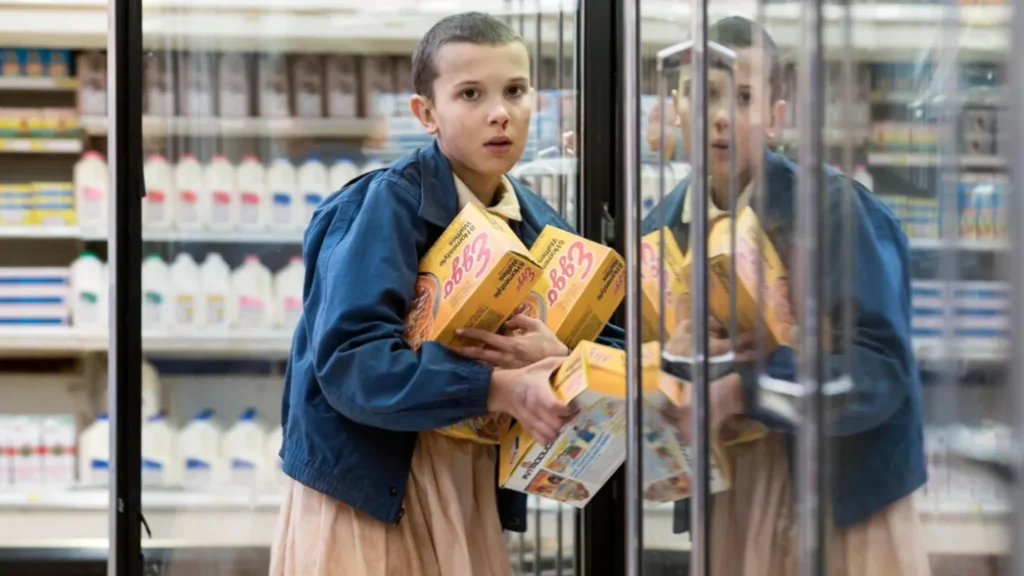
“Stranger Things,” which debuted in 2016, is set in the 1980s and revolves around a group of middle school students in a made-up rural Indiana town who must deal with paranormal and supernatural happenings after their friend vanishes. A panicked mother, an alcoholic police chief searching for the missing son, and a young girl with psychokinetic abilities who has fled from a covert research lab are all involved.
The fifth and last season is now making its staggered Netflix release nearly ten years later.
The first four episodes of Volume 1, which launched during Thanksgiving, had 59.6 million views in its first five days, making it the most popular opening week for an English-language Netflix series. After Seasons 2 and 3 of the Korean series “Squid Game,” it comes in third place overall.
Volume 1 had an additional 23.6 million views in its second week on the site, topping the streamer’s weekly charts. According to Netflix, viewership for each of the preceding four seasons increased week over week as viewers rewatched earlier episodes.
Three episodes make up Volume 2 of “Stranger Things” Season 5, which premieres on Christmas. The finale episode, which lasts just over two hours, is scheduled for New Year’s Eve. On New Year’s Eve and New Year’s Day, the finale will be shown in a few theatres.
Netflix will not be selling tickets for these screenings, defying convention. Rather, over 500 domestic theatres will offer concession tickets that ensure a spot at the movies. These coupons can be applied to food and drink purchases made at the locations. Additionally, all proceeds from these purchases will be retained by the theatre owners.
Due to Netflix’s refusal to commit to a lengthy theatrical run for films it wants to be eligible for awards contention, the streaming service and theatres have previously clashed over release terms.
Adam Aron, CEO of AMC, stated earlier this month that “playing Netflix theatrical movies in our theatres would make us happier.” “We believe that may be advantageous for everyone concerned. However, there are still a lot of issues that need to be resolved in order to serve our current studio partners fairly. Nevertheless, progress has been made.
Turning Culture Upside Down
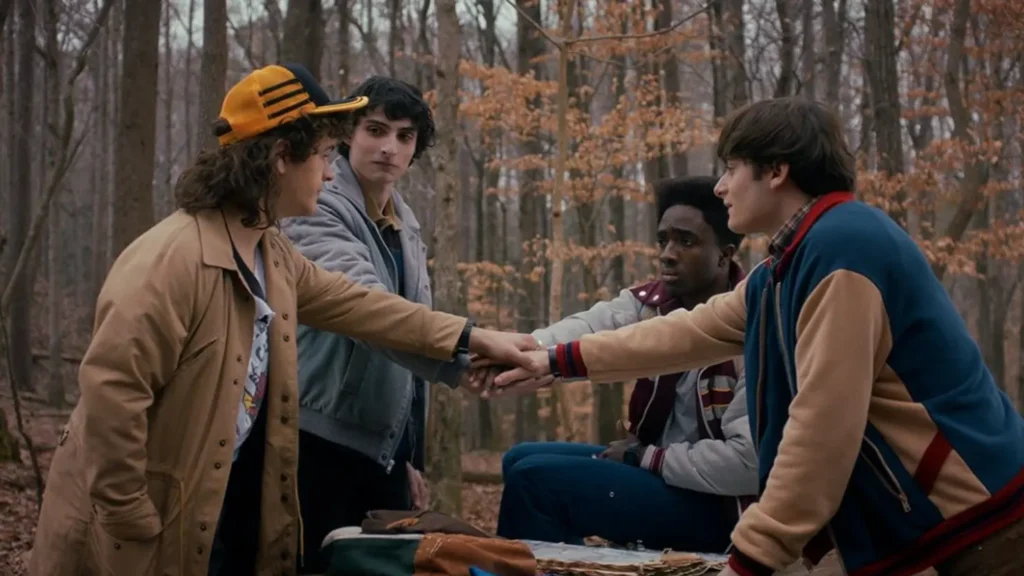
“Stranger Things” has revived 1980s music, fashion, and even food brands that were dropped for a new age.
Netflix collaborated with consumer businesses to produce T-shirts, mugs, plush toys, and other items when the series launched, but it was mostly working with licensees. This indicates that it involved either participating in brand alliances where no funds were exchanged or collecting fees for other businesses to design and manufacture the products.
The business established its own consumer goods segment in 2019, and two years later it opened an officially licensed internet store.
Netflix announced numerous alliances and partnerships with companies in the retail, restaurant, and product industries at the same time as the premiere of the last season of “Stranger Things.”
In order to provide “Stranger Things” toys and memorabilia to fans of the show, the streamer has partnered with Lego, Funko, Squishmallows, Hasbro, Jazwares, and Care Bears. It has partnerships with food and beverage companies including Eggo, Doritos, Kellogg, Gatorade, and Starbucks, as well as clothing and lifestyle brands like Gap, Nike, Crocs, CoverGirl, Zara, and Wrangler, among others.
Marian Lee, Netflix’s chief marketing officer, said in a statement earlier this month, “We are incredibly excited to partner with so many fantastic brands, offering fans – and fellow nerds – the largest collection of products and experiences in ‘Stranger Things’ history and one of our biggest campaigns yet as we celebrate the fifth and final season of this globally beloved series.”
Netflix has ventured into the realm of live events outside of retail, bringing “Stranger Things” to life with an immersive experience that lets viewers tour Hawkins Lab and other memorable places from the show. It will operate in Mexico City next month and is presently operating in Abu Dhabi, United Arab Emirates.
Additionally, a play titled “Stranger Things: The First Shadow” has been performing in New York since this spring and in London’s West End since 2023.
Additionally, “Stranger Things” elements have been added to the well-known online video game Fortnite thanks to a partnership between Netflix and Epic Games.
Netflix uses live events and merchandise as more than just a means of making money outside of streaming subscriptions. According to industry analysts, it keeps viewers interested in its material during program breaks and between film sequels.
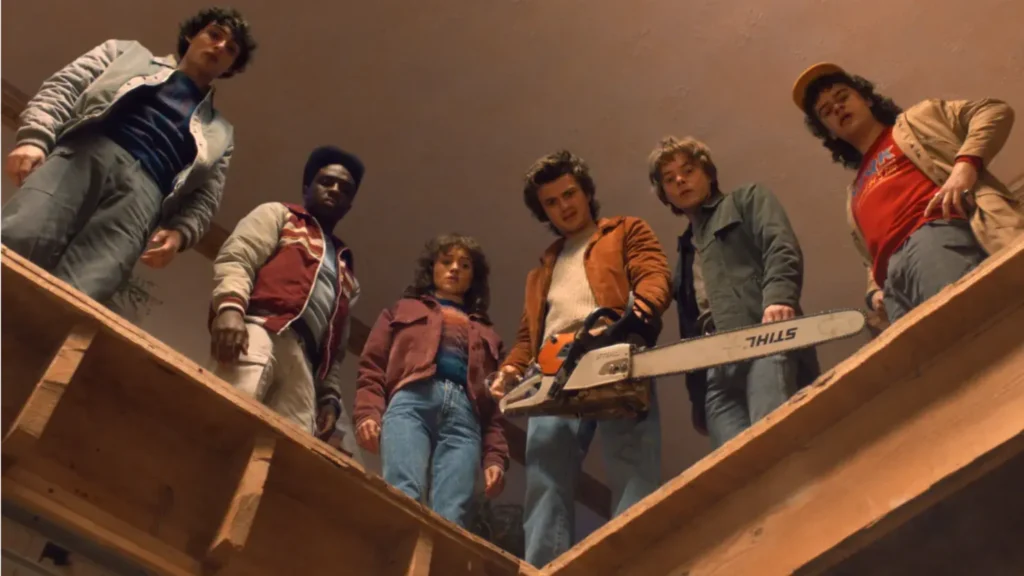
Although it is not exclusive to Netflix, this playbook demonstrates the streaming service’s development. “Strangers Things” is a benchmark for what is feasible rather than a model that all Netflix series and films can follow.
In an email to CNBC, Michael Pachter, an analyst at Wedbush, stated, “Netflix had a few good shows early on (Orange is the New Black and House of Cards), but it took a couple of years of whiffs before they came up with Stranger Things.” With programs like “Squid Game” and “Bridgerton,” they have achieved great popularity since then, but it was unclear whether they could find a formula for creating original intellectual property.
He continued, “Stranger Things has remained a solid IP throughout and has driven a lot of recognition.”